
Quick Answer:
Red clay stains can often be removed from carpet, especially when they’re treated before the iron-rich minerals permanently discolor the fibers. The most effective approach is to remove as much dry clay as possible, avoid over-scrubbing or excessive soap, and use professional hot water extraction when the stain has become embedded or continues to return after DIY cleaning.
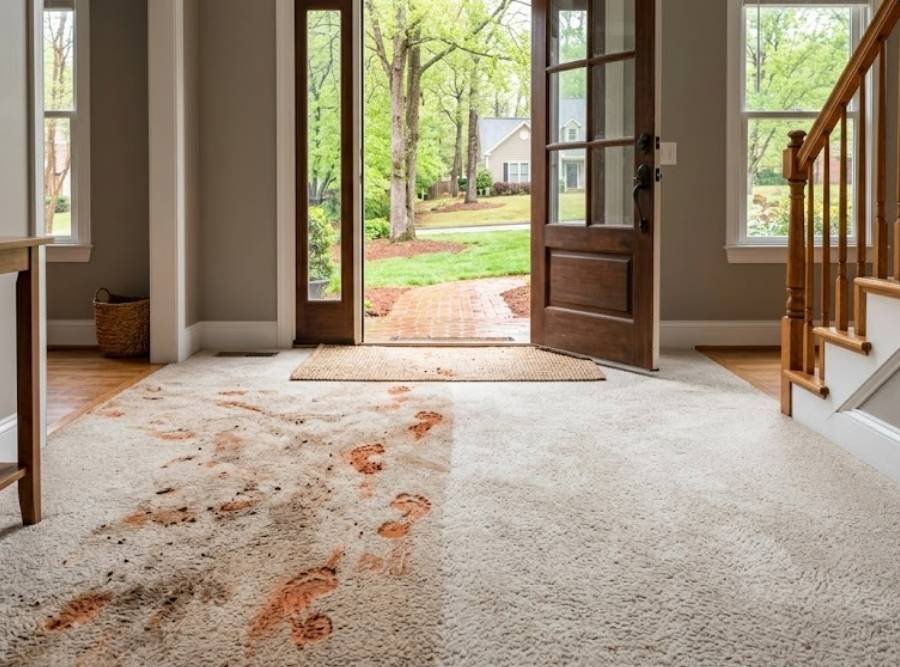
Few things are more frustrating than watching a freshly vacuumed carpet still look dirty because of Georgia’s famous red clay. It often starts with a few muddy footprints after a spring thunderstorm, a child running in from the backyard, a dog returning from the yard, or boots carrying soil inside after landscaping work. You wipe up the visible mud, vacuum several times, and maybe even rent a carpet cleaning machine, yet the orange discoloration seems determined to stay. After a while, many homeowners begin wondering whether the carpet is permanently stained or if replacing it is the only realistic option.
That question is one we hear regularly throughout Acworth. Whether we’re cleaning homes near Historic Downtown, Brookstone, Bentwater, Centennial Lakes, or neighborhoods around Lake Acworth and Lake Allatoona, the story is remarkably similar. The carpet may have looked almost new before a few rainy weeks, but repeated exposure to Georgia’s iron-rich clay gradually changes its appearance until entire entryways, hallways, and living areas begin looking dull or permanently dirty. What surprises many homeowners is that the visible orange color often tells only part of the story. Before we ever begin cleaning, we’re evaluating what has actually happened beneath the surface because that determines whether we’re dealing with removable soil, embedded mineral contamination, or permanent fiber discoloration.
One of the biggest misconceptions surrounding red clay is that it’s simply mud with an unusual color. If that were true, cleaning it would usually be straightforward. In reality, Georgia’s red clay behaves very differently from ordinary dirt because of its mineral composition, the way it interacts with carpet fibers, and how easily it becomes compacted through everyday foot traffic. Understanding those differences is the first step toward understanding why some carpets respond exceptionally well to professional restoration while others require a different conversation about realistic expectations.
Why Georgia’s Red Clay Is So Difficult to Remove From Carpet
Georgia’s distinctive red soil owes its color to naturally occurring iron oxides, the same mineral compounds that give many rocks and clay deposits their reddish appearance. Unlike loose household dust or dry soil that typically sits near the surface of the carpet, these extremely fine mineral particles become suspended in water during rainy weather and are easily carried indoors on shoes, pets, strollers, lawn equipment, and construction materials. Once someone walks across the carpet, the weight of each step presses those particles deeper into the carpet pile instead of leaving them on top where a vacuum can easily remove them.
This is one of the reasons we often tell homeowners that red clay is as much a restoration issue as it is a cleaning issue. Every time someone walks across a damp clay stain, thousands of fine mineral particles are pushed farther between the carpet fibers. As the moisture evaporates, the clay hardens and settles below the visible surface while the iron-rich residue remains trapped within the pile. By the time the carpet appears dry again, much of the contamination is no longer sitting where ordinary household cleaning methods can easily reach it.
Another factor that makes red clay particularly stubborn is the size of the particles themselves. They are significantly finer than many homeowners realize, which allows them to migrate well below the tips of the carpet fibers into areas that receive less airflow during routine vacuuming. Busy entryways, hallways, and family rooms become especially vulnerable because repeated foot traffic continually compacts those particles deeper while simultaneously wearing down the protective resilience of the carpet pile. Over time, the carpet begins losing its brightness even if it is vacuumed regularly because the embedded mineral soil is changing the way light reflects from the fibers.
We’ve restored carpets throughout Acworth where homeowners believed the orange color meant the carpet fibers themselves had permanently changed. Quite often, what we actually discovered was years of compacted mineral soil that had accumulated beneath the visible surface. Once that embedded contamination was properly suspended and extracted, the carpet looked dramatically different because the fibers themselves were still structurally healthy. Other times, however, the iron-rich minerals had remained in contact with the carpet long enough to leave permanent discoloration. Distinguishing between those two situations is one of the most important parts of professional carpet restoration because cleaning methods alone cannot reverse permanent changes within the fiber itself.
Why Many DIY Cleaning Attempts Make the Problem Worse Instead of Better
When homeowners discover orange footprints stretching across the carpet, their first instinct is usually to start cleaning immediately. That reaction makes perfect sense, but the sequence of cleaning is often more important than the cleaning product itself. One of the biggest mistakes we encounter is introducing water before removing as much dry clay as possible. The remaining mineral soil quickly turns back into mud, allowing fine particles to spread farther through the carpet instead of being lifted away.
Another common misunderstanding is believing that more scrubbing automatically produces better results. In reality, aggressive scrubbing often pushes abrasive clay particles even deeper into the carpet pile while placing additional stress on the fibers. Instead of lifting contamination out of the carpet, repeated brushing can grind the minerals against the fibers, increasing wear in areas that already experience the highest traffic. This is one reason entryways frequently age much faster than surrounding rooms, even when the rest of the carpet remains in relatively good condition.
We also see many situations where homeowners unintentionally create a second problem while trying to solve the first. Dish soap, laundry detergent, vinegar mixtures, rental machine shampoos, and various stain removers are often applied one after another in hopes that something will finally remove the orange discoloration. While the carpet may temporarily appear cleaner, leftover detergent residue frequently remains behind after the cleaning solution dries. That residue acts like a magnet for additional soil, causing the same areas to become dirty much more quickly than before. Homeowners often describe this as the stain “coming back,” when in reality the remaining residue is attracting new dirt while any embedded clay that wasn’t fully extracted continues migrating toward the surface during drying.
One of the most discouraging moments for homeowners happens when the carpet looks almost perfect immediately after cleaning but appears orange again the following morning. In many cases, this isn’t because the stain somehow returned overnight. It’s because moisture carried suspended mineral particles upward as the carpet dried, a process professionals refer to as wicking. Unless enough of those particles are completely removed during extraction, drying can bring the remaining contamination back toward the tips of the carpet fibers, making it appear as though the original stain has reappeared even after hours of cleaning.
Not Every Orange Carpet Is Permanently Stained
One of the most valuable things experience teaches is that appearance alone rarely tells the whole story. Two carpets can have nearly identical orange traffic lanes, yet require completely different restoration strategies because the underlying causes are different. In one home, we’re looking at removable embedded soil that has gradually accumulated over several seasons of muddy weather. In another, we’re looking at permanent fiber discoloration after years of repeated moisture exposure, delayed cleanup, and unsuccessful DIY cleaning attempts.
That’s why we avoid making promises based solely on photographs or a quick glance across the room. During an inspection, we’re evaluating the condition of the carpet fibers, the density of the embedded soil, the age of the staining, previous cleaning attempts, the amount of traffic the area receives, and whether moisture may have reached the carpet padding beneath the surface. Those details tell us far more than the color alone ever could, and they allow us to recommend a restoration approach that’s based on the actual condition of the carpet rather than assumptions.
Perhaps the most encouraging news for many Acworth homeowners is that a surprising number of carpets that appear ready for replacement still have healthy fibers beneath years of embedded clay contamination. Professional restoration cannot reverse every form of damage, and we believe it’s important to be honest when permanent discoloration has occurred. However, we’ve also seen many situations where homeowners were preparing to replace perfectly serviceable carpet simply because ordinary cleaning methods had never fully addressed the mineral soil hidden below the surface. Understanding that distinction often makes the difference between an expensive replacement project and a carpet that can continue serving the home for years with the right restoration approach.
How Professional Carpet Restoration Removes Embedded Red Clay
By the time many homeowners contact us, they have already vacuumed repeatedly, rented a carpet cleaning machine, or tried several stain removers without achieving the results they expected. That doesn’t necessarily mean the carpet cannot be restored. More often, it means the visible stain is only part of the problem. Professional carpet restoration focuses on removing the embedded mineral contamination below the surface rather than simply improving the carpet’s appearance for a few hours.
One of the biggest differences between professional restoration and many DIY methods is that we don’t begin by assuming every stain should be treated the same way. Before cleaning starts, we evaluate the type of carpet fiber, the severity of the contamination, the amount of traffic the area receives, whether previous cleaning products have left residue behind, and whether moisture may have affected the carpet padding. Those observations help determine the safest and most effective restoration process because the chemistry and cleaning technique that works well for one carpet may not be appropriate for another.
Once the carpet has been evaluated, the goal is to suspend the embedded soil rather than simply wetting it. Specialized preconditioning solutions are selected to loosen compacted mineral particles from the carpet pile without unnecessarily damaging the fibers. Depending on the condition of the carpet, controlled agitation may also be used to help separate years of compacted clay from the fiber structure. Only after the embedded contamination has been loosened does thorough hot water extraction begin, removing suspended soil, cleaning solution, and moisture together instead of allowing them to remain within the carpet.
Extraction is often the stage homeowners underestimate the most. Simply adding water to a carpet does not clean it unless enough suction is available to remove both the water and the suspended contaminants. Professional extraction helps reduce the amount of residue left behind, minimizes drying time, and decreases the likelihood that remaining clay particles will wick back toward the surface as the carpet dries. In our experience, this is one of the biggest reasons professionally restored carpets often maintain their appearance much longer than carpets cleaned with equipment that cannot fully remove embedded contamination.
Why Carpet Material Makes a Difference
Many homeowners are surprised to learn that two carpets exposed to the same amount of red clay may not clean up the same way. That’s because carpet fibers are manufactured from different materials, each with its own characteristics, cleaning requirements, and ability to release embedded soil. The carpet’s age, construction, and overall condition also influence how successfully it can be restored after repeated exposure to Georgia’s red clay.
For example, higher-quality nylon carpets often respond exceptionally well to professional cleaning because the fibers are generally more resilient and better able to release embedded particulate soil when the correct cleaning methods are used. Polyester carpets, while highly stain resistant to many spills, may sometimes retain oily soils differently and can become matted in heavy traffic areas more quickly if abrasive mineral particles remain trapped within the pile. As fibers gradually lose their original texture through years of foot traffic, they become less effective at releasing deeply embedded contamination regardless of the cleaning method being used.
This is one reason we avoid making blanket statements such as “professional cleaning removes every red clay stain.” That simply isn’t true. Success depends on the type of carpet, how long the contamination has been present, whether the fibers have experienced permanent discoloration, and what previous cleaning attempts have already taken place. Honest expectations are part of professional restoration, and understanding the condition of the material is just as important as understanding the stain itself.
Preventing Red Clay From Becoming a Recurring Problem
Removing red clay from carpet is only part of the solution. Preventing it from returning just as quickly often has an even greater impact on the long-term appearance of the home. Throughout Acworth, we frequently see carpets that clean beautifully but begin accumulating red clay again within weeks because the conditions that introduced the soil in the first place haven’t changed.
Entryways deserve the most attention because they receive the highest concentration of outdoor traffic. Quality walk-off mats placed both outside and inside exterior doors help capture a significant amount of loose soil before it reaches the carpet. During periods of heavy rain, encouraging family members and guests to remove muddy shoes near the entrance can dramatically reduce how much iron-rich clay is carried into the home. Homes with active children, large dogs, or frequent backyard activity often benefit from establishing a designated transition area where shoes can be cleaned before anyone walks across carpeted rooms.
Routine vacuuming also plays a larger role than many homeowners realize. Waiting until the carpet looks visibly dirty allows fine mineral particles to become increasingly compacted through everyday foot traffic. Regular vacuuming with good filtration removes loose soil before it can settle deeper into the carpet pile where extraction becomes more difficult. While vacuuming alone cannot remove embedded clay, it does help slow the accumulation process and reduces the amount of abrasive particulate soil grinding against the carpet fibers every day.
Another recommendation we often make is scheduling professional cleaning before traffic lanes begin looking permanently discolored. Many homeowners wait until the carpet appears beyond saving before calling for service, but periodic maintenance typically requires less aggressive restoration than heavily neglected carpet. Removing embedded mineral soil before it causes excessive fiber wear can help preserve the carpet’s appearance and extend its useful life for many additional years.
When Cleaning May Not Be Enough
One of the reasons homeowners appreciate an honest evaluation is because professional restoration isn’t about promising miracles. Our goal is to restore surfaces whenever it makes sense, but we also believe homeowners deserve realistic guidance when a carpet has reached the point where replacement should be considered. That recommendation is less common than many people expect, but there are situations where it becomes the most practical long-term solution.
Permanent fiber discoloration is one example. If iron-rich minerals have remained in contact with the carpet for an extended period, the fibers themselves may have changed color in ways that cleaning cannot reverse. Likewise, if repeated oversaturation has allowed muddy water to contaminate the carpet padding beneath the surface, additional issues such as persistent odors, recurring wicking, or mold growth may also need to be addressed before the carpet can be fully restored. Years of abrasive mineral soil can also wear traffic lanes to the point where the fibers have physically deteriorated rather than simply becoming dirty.
Fortunately, these situations are less common than many homeowners fear. We’ve inspected carpets throughout Acworth where homeowners assumed replacement was inevitable because the carpet looked permanently orange after multiple DIY attempts. After evaluating the condition of the fibers, we found that the underlying carpet remained structurally sound and that the majority of the discoloration was still removable embedded clay rather than irreversible damage. That’s why a professional assessment is often worthwhile before making the much larger investment of replacing the entire carpet.
Restore the Carpet Before You Replace It
Georgia’s red clay is part of life in Acworth, and almost every homeowner will eventually deal with muddy footprints after heavy rain, landscaping projects, or everyday outdoor activity. While those orange stains can certainly be frustrating, they don’t automatically mean your carpet is beyond saving. Understanding the difference between removable mineral contamination and permanent fiber discoloration is often the key to making the right decision.
At Restore N Refresh, we approach every carpet as a restoration project rather than simply another cleaning appointment. We take the time to identify what’s actually affecting the carpet, choose the appropriate cleaning method for the material, and provide honest recommendations based on the condition of the fibers rather than making assumptions from the surface appearance alone. In many cases, that careful evaluation allows homeowners to restore carpets they thought would need to be replaced.
If your carpet still looks orange after vacuuming, rental machine cleaning, or repeated DIY stain removal attempts, we’d be happy to evaluate the problem and explain what we’re seeing. Whether the solution is professional restoration, targeted spot treatment, or simply practical advice on maintaining your carpet moving forward, our goal is to help you make the most informed decision for your home and protect your flooring investment for years to come.
